
Steel maker JSW Steel's Q3 results, announced on January 24, 2025, after market hours, failed to meet Street expectations. The company reported a consolidated net profit attributable to the owners of Rs 717 crore in Q3FY25, reflecting a 70.3 per cent decline Y-o-Y, compared to Rs 2,415 crore in Q3FY24.

The answer depends on your financial goals and risk appetite, says Certified Financial Planner Ramalingam Kalirajan, and explains why.

Temasek is nearing a deal to acquire a 10% per cent stake in Haldiram Snacks Foods, valued at $10 billion.
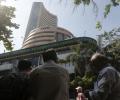
Benchmark equity indices Sensex and Nifty ticked higher for the ninth straight session on Thursday, buoyed by fag-end buying in banking, financial and realty stocks amid encouraging domestic retail inflation data. Weak trends in IT counters and fall in the overnight US equity markets triggered by fresh concerns over recession, however, put a check on market's uptrend. In a largely subdued session, the 30-share BSE Sensex went up marginally by 38.23 points or 0.06 per cent to settle at 60,431.

10 non-bank and non-finance stocks from the BSE500 Index universe that offer an optimal blend of low valuation, reasonably robust revenue and earnings growth in recent quarters, a strong balance sheet, and most importantly, positive cash flow from their operations.

Trading in the domestic stock market would be influenced by trends in the global equities, macroeconomic data and foreign fund movement in a holiday-shortened week, analysts said. Markets may face volatile trends on Monday after Federal Reserve Chair Jerome Powell's speech at the Fed's annual economic symposium in Jackson Hole on Friday.

Among the Sensex firms, NTPC, Mahindra & Mahindra, Wipro, Kotak Mahindra Bank, Tata Steel, Asian Paints, Bharti Airtel, Power Grid, Titan and HDFC Bank were the major gainers. Bajaj Finance, Bajaj Finserv, Infosys, Tata Consultancy Services, Tata Motors and HCL Technologies were the laggards.

Indian growth in the rest of this fiscal year and next will be propelled by robust domestic consumption as consumer confidence improves, and by investment, including large increases in government capital expenditure, according to the Asian Development Outlook September 2023. "As slowing exports could foment headwinds for the economy, and erratic rainfall patterns are likely to undermine agricultural output, the growth forecast for FY2023 is revised down marginally to 6.3 per cent," ADB said.

BSE Metal and Capital Goods indices plunged over 2% followed by counters like Consumer Durables, Auto, Banks and Realty, all falling down between 1-2%.

'There's a misconception that all Rs 1 lakh crore will be spent immediately, leading to higher consumption of FMCG goods, travel, and vehicle purchases.' 'While some of this money will go toward consumption, not all of it will.' 'The impact depends on where people deploy their savings.'

From the Sensex pack, State Bank of India, Axis Bank, IndusInd Bank, Tech Mahindra, HCL Technologies, Tata Consultancy Services, Maruti Suzuki, Tata Steel and Tata Motors were the major gainers. Power Grid and HDFC Bank were the laggards from the pack.

Foreign investors have adopted a cautious stance and infused Rs 7,320 crore in the Indian equities in August owing to high valuation of stocks and the unwinding of the Yen carry trade after Bank of Japan raised interest rates. This investment was way lower than Rs 32,365 crore in July and Rs 26,565 crore in June, according to data with the depositories. While September is likely to see continued interest from FPIs, the flows would be shaped by a combination of domestic political stability, economic indicators, global interest rate movements, market valuations, sectoral preferences, and the attractiveness of the debt market, Vipul Bhowar, Director Listed Investments, Waterfield Advisors, said.

'Investors looking at the next 6-12 months can be certain that the Fed will maintain its easing cycle, and we expect the overall environment to be conducive for fixed income investments for portfolio diversification.'

>It's not easy to predict the market. But there are at least two positive factors to back the PSU banks, explains Tamal Bandyopadhyay.
.jpg)
The 30 Sensex companies alone, which are among the biggest companies in the country, now account for nearly 50% or about Rs 47 lakh crore of total investor wealth.

The Sensex had bounced back with gains of 94 points or 0.3%

Automotive (auto) and auto ancillary stocks have been in the fast lane thus far in 2023-24 (FY24), with the National Stock Exchange Nifty Auto Index surging nearly 27 per cent, outperforming the Nifty50, which has gained roughly 11 per cent during this period. The top-gear performance of auto stocks at the bourses, according to A K Prabhakar, head of research at IDBI Capital, has been triggered by the premiumisation of products across vehicle manufacturers, which has seen vehicle sales remaining relatively stable. "It is not about higher sales figures now, but about premiumisation.

Elevated food price-led inflation could become a sore point for markets, which they seem to be ignoring at current levels, observe analysts. Retail inflation in India - as measured by the Consumer Price Index (CPI) - came in at a three-month high of 6.52 per cent in January 2023, compared with 5.72 per cent in December and 5.88 per cent in November 2022. The inflation print for February, according to Madan Sabnavis, chief economist at Bank of Baroda, will be critical for the Reserve Bank of India's monetary policy committee.

'It makes sense to have gold in one's portfolio keeping the political and economic risks of 2024 in mind.'

Among the 11 equity sub-categories, thematic funds received the highest net inflows at Rs 9,017 crore, followed by smallcap funds at Rs 5,721 crore and flexicap funds at Rs 5,698 crore.

Bank shares were the top losers after sharp gains last week.

Markets ended flat ahead of January F&O contracts expiry tomorrow. Markets closed flat with a slight negative bias after a volatile session that saw key benchmark indices move in a narrow range.

Footwear companies were among the weakest performers in the consumer discretionary sector during the October-December quarter (Q3) of 2024-25. The combined revenue growth of the top four listed firms was just 2.9 per cent year-on-year (Y-o-Y) - the lowest among major discretionary categories.

Raamdeo's base argument is that India's stock market merely mirrors the national economy, which is poised for big things.

The Nifty IT index, data shows, has outperformed the markets in each of the last four election years post the result. announcement.

Tata Steel, Bajaj Finance, Mahindra & Mahindra, JSW Steel, NTPC, Adani Ports, Bajaj Finserv and Larsen & Toubro were also among the laggards. However, Power Grid, HCL Technologies, Infosys, Tech Mahindra, Tata Consultancy Services and ICICI Bank were among the gainers.

After a strong show during the September quarter (Q2FY25) and favourable demand conditions, going ahead, the country's largest player in the room air conditioner segment, Voltas is well placed to improve its market share. Expectations of record volumes in FY25 for the sector and the company's strategy of prioritising market share over margins could help the leader expand share in the room AC segment.

MNC funds invest in companies where foreign promoters have more than 50 per cent shareholding.

Regardless of market levels, invest in stocks and equity mutual funds in a staggered manner.

Tata Motors was the biggest loser in the Sensex pack, skidding 1.77 per cent, followed by SBI, Power Grid, Tata Steel, Infosys, UltraTech Cement, Titan, Larsen & Toubro, Reliance Industries and Maruti. On the other hand, IndusInd Bank, Bharti Airtel, Asian Paints, NTPC, HCL Technologies, HDFC and Sun Pharma were the gainers.

IT major Accenture's second straight cut in its revenue growth forecast for FY23 suggests there is more pain ahead for the Indian IT sector, say analysts. Accenture has lowered the top end of its FY23 growth guidance in constant currency (CC) to 9 per cent from 10 per cent earlier. The firm, which follows a September-August fiscal cycle, expects a 2-6 per cent CC growth in Q4 of FY23 (June-August 2023) versus the 6-10 per cent prior guidance.

From the Sensex pack, Infosys tanked over 8 per cent after the company reported a lower-than-expected 11 per cent rise in net profit for the June quarter and delivered a shocker as it slashed its FY24 growth outlook to 1-3.5 per cent on delayed decision-making by clients amid global macro uncertainties. Hindustan Unilever, HCL Technologies, Wipro, and Tech Mahindra were the other major laggards. On the other hand, Larsen & Toubro rose the most by 3.88 per cent after it bagged an order of worth over Rs 7,000 crore from the bullet train project.

Automobile giant Tata Motors' shares were in demand on Wednesday as the stock rallied as much as 3.69 per cent to hit an intraday high of Rs 671.80 per share, before settling 3.18 per cent higher at Rs 668.45. By comparison, the BSE Sensex settled 0.10 per cent, or 72.56 points, lower at 74,029.76.
Among the 30 Sensex firms, Mahindra & Mahindra, IndusInd Bank, Bharti Airtel, Axis Bank, Tata Motors and ICICI Bank were the biggest laggards. In contrast, Tata Steel, Tata Consultancy Services, NTPC, JSW Steel, Asian Paints and Reliance Industries were gainers.

The market benchmark appears set to end 2013 on a positive note with a modest gain of over 7 per cent, but such gains are not to be seen in a majority of stocks available in the market, which predominantly include those of mid-size and smaller companies, shows an analysis of various indices.

Largecap companies are generally less vulnerable to economic slowdowns than their mid- and smallcap counterparts.

Sitharaman also said different departments of the government are working to provide relief to industry, which could be severely impacted by the fast-spreading virus.

While selecting a smallcap scheme, go with one that has a good track record and a stable fund manager.

Less-than-expected rainfall and a poor spatial distribution, experts say, can rekindle fears of a rise in food and fuel inflation that can have an impact on the RBI's monetary policy. The fear of less than optimal rainfall due to El Nino this year, analysts believe, is the biggest short-term risk for the markets, which they said has not been fully priced in yet by them. Monsoon set over Kerala on June 08, a week later than its scheduled date.
